

Parshat Lech Lecha
Download PDF PDF in French Share your feedback

Before we learn together, I would like to share one thought that has been with me all week. It gathers the few small insights I had for this sheet into one, and I hope it also ties together much of what our teachers say in the pages that follow.
First, a quick look at our parshah. At 75, Avram is told to leave his land and his father’s house, and he travels to Canaan with Sarai and his nephew Lot. A famine sends him down to Mitzrayim, where Pharaoh takes Sarai and is struck with plagues; Avram comes back rich. Avram and Lot part ways, and Lot settles near Sedom. When four kings take Lot captive, Avram rescues him with 318 men; Malki-Tzedek blesses him, and Avram refuses to keep even a thread of the spoils. At the Bris Bein HaBesarim Hashem promises him the Land. Hagar bears Yishmael, and at 99 Avram becomes Avraham, receives the mitzvah of bris milah, and circumcises himself and his whole household that very day.
Hashem’s first words to Avram are lech lecha (Bereishis 12:1). Rashi explains them as “for your own benefit, for your own good.” But lecha can also be read “to yourself”: go to yourself. The Zohar reads lech lecha as לְמִנְדַע לָךְ וּלְאַתְקָנָא גַּרְמָךְ, “so as to know thyself and prepare thyself” (Zohar I:78a). The Alshich explains that Avraham was going to his very self, the root of his soul that cleaves to G‑d (Toras Moshe 12:1). The Rebbe teaches that lech lecha “literally means, “Go to yourself,”” toward the soul’s essence (Likkutei Sichos vol. 5, in “Torah Studies”). And the Chassidic commentary adds: “The more we connect with our root, the more we, too, will be able to see Divinity” (Kehot Chumash, Chassidic Insights). The road to the Land that Hashem would show Avram ran first through Avram himself.
Why should the road to Hashem pass through oneself? This is the point I most want to make. Going within allows us to understand how the ego works: how it speaks, what it wants, how easily it dresses itself up as a principle. Once I can see my own ego, I can ask an honest question in every situation: is my ego driving me right now, or is it what Hashem wants? That awareness is what lets us humble ourselves, step by step, to the point of removing our ego from the situation altogether, and then we can react to it only with the will of Hashem. I believe this was the message of Hashem to Avram, and it is His message to each one of us.
Our parshah gives us a picture of this inner work in the mitzvah of bris milah (17:10–11). Shechitah and milah are done almost the same way: a perfectly smooth blade makes a precise cut, and the blood is drawn out (Mishnah Shabbos 19:2). The Torah says the blood is the nefesh (Vayikra 17:11; Devarim 12:23). In shechitah, draining it means we do not take the animal’s animal nature into ourselves, and kosher food can then be elevated and build a body through which the neshamah can shine (Tanya ch. 7–8). Milah points to the same work within us. Its final purpose is the Torah’s promise, “Hashem, your G‑d, will circumcise your heart” (Devarim 30:6), which the Ramban explains as the days of Moshiach, when choosing good will be natural to us. As I understand it, every such “cut” draws the raw self-will out of a person, so that it no longer runs him. Yet nothing is destroyed: the brain rules the heart (Tanya ch. 12), and the heart gives the brain its drive and energy, so the strength of the animal soul is harnessed for the service of Hashem. The ego’s energy stays with us; only its rule comes to an end.
What does a person look like when this work is complete? I picture the tzaddik as a perfect conduit for Hashem’s will. This week Rabbi Manis Friedman, speaking about marriage, said: “Compatibility means there is nothing about you that irks me” (video on X, Oct 20, 2026). He meant husband and wife; applying it to Hashem and the tzaddik is my own. Our relationship with Hashem is itself a marriage: “I will betroth you to Me forever” (Hoshea 2:21), and “the rejoicing of a bridegroom over a bride shall your G‑d rejoice over you” (Yeshayahu 62:5). The tzaddik lives that marriage with nothing of Hashem’s will irking him and nothing in him getting in the way. Hashem tells Avraham, “walk before Me and be perfect” (17:1), and Rabbi Shalom Arush teaches that tamim is an even greater praise than tzaddik: “Tamim means that he never moved from the word of G‑d, not even a tiny bit… Everything that Hashem told him, he simply did it to the fullest” (video on X, Oct 20, 2026).
But a conduit is not silent. In next week’s parshah Avraham confronts Hashem over Sedom: “Will the Judge of the entire earth not perform justice?” (18:25). He knew Hashem wanted this from him, “Shall I conceal from Abraham what I am doing?” (18:17), so even his challenge was Hashem’s will flowing through him. Avraham could plead for Sedom without any ego in it: he was not defending his own honor or his own opinion. How can we tell Hashem’s will from our own? Rav Yitzchak Ginsburgh teaches that Providence does speak to us, but we can misread it, “sometimes you can take it the opposite direction altogether.” The key is shiflut, lowliness: “I have to nullify my ego. If I nullify my ego, then there’s a good chance that the way that you will conceive of that message will be true” (video on X, Oct 22, 2026). Rav Ginsburgh does not speak there about Avraham; linking his words to Avraham is my own. When Hashem finished speaking, He “went up from above” Avraham (17:22), and Rashi learns from this “that the righteous are the chariot of the Omnipresent,” and the Alter Rebbe describes the Avos as “serving as a vehicle solely for the Supreme Will alone throughout their lives” (Tanya ch. 23). A chariot has no will of its own; it goes where its rider directs.
Each of our teachers this week lights up another part of this road. The Rebbe teaches that Avraham’s descent to Mitzrayim was itself part of the ascent, and that the deeds of the righteous “make the something (Yesh) into nothing (Ayin)” (Sefer HaMa’amarim 5737): going to yourself is not inflating the self but finding the G‑dly “nothing” inside the “something,” and the covenant of milah is what makes every Jew such a tzaddik. Rav Ginsburgh counts ayin, efes and tohu to 613: all the mitzvos are “for the sake of neutralizing my ego.” The Rebbe also teaches that to change the world a person must “go out” and “leave behind his own self-concern” (Likkutei Sichos vol. 15); going to your truest self means going out of your ego. Rav Dynovisz sets Noach, who walked with G‑d in total submission, beside an Avraham who learned to speak to Hashem. Rabbi YY Jacobson reminds us that on Shabbos Lech Lecha, 13 Cheshvan 5750, the Rebbe asked that children be given coins for tzedakah, training them to be givers, and giving is the ego stepping aside for someone else. Rabbi Reuven Wolf teaches that “we should always see the good in people and around us,” while the ego hunts for faults. And Rabbi Manis Friedman and Rav Ginsburgh both point us to a commitment beyond reason, the one place the ego cannot argue us out of.
This week’s news shows that none of this is theory. On Oct 17–18, 2026, nationwide protests in France over the cost of living and school conditions turned into riots, looting and arson in Paris, Marseille, Lyon, Limoges and other cities: about 2,400 arrests, about 1,000 police injured, and local curfews from Oct 19 (BBC News, Israel Hayom, Euronews, 20 Minutes, Oct 19). Violent unrest also hit Milan, Brussels and Tirana. Most of the rioters were Muslim, and the riots clearly carried an antisemitic edge. Palestinian flags and keffiyehs were a recurring sight at the violent protests (JTA, Oct 18). Jewish-owned shops were set ablaze in Marseille (JTA, Oct 18) and looted in Paris, and a Chabad rabbi’s car was burned near Place de la République (Ynetnews, Oct 22). A temporary synagogue in Paris’s 19th arrondissement was ransacked overnight; its Torah scrolls were untouched (JTA; JNS, Oct 18–19). Online, posts blaming Jews for the unrest spread quickly (Combat Antisemitism Movement, Oct 16–18). When we read such news, the ego answers first, with fear or with anger. The teachings of the Rebbe in “Torah on the News” answer from a different place: that “Anarchy must ultimately destroy the anarchist”; that after an attack on a place of Torah, “By your continued building you will be comforted”; and that even with one who hates us, we “speak to him in a diplomatic way.” Each is a reaction with the ego taken out of it, so that only Hashem’s will remains: more Torah, more mitzvos, more righteousness and justice in the world around us.
Finally, Rabbi Simon Jacobson brings the Rebbe’s footnote that “sifrei cheshbon” also means cheshbon hanefesh: “A Kheshbon Hanefesh in simple English means a little soul searching. Introspection.” So Geulah, too, begins with going within, and Moshiach is “a world where you discover who you are.” May each of us take one honest look inward this Shabbos, see our ego for what it is, and gently set it aside, so that Hashem’s will can flow through us without obstruction. And may Hashem very soon fulfill His promise to circumcise all our hearts, with the coming of Mashiach, speedily in our days.
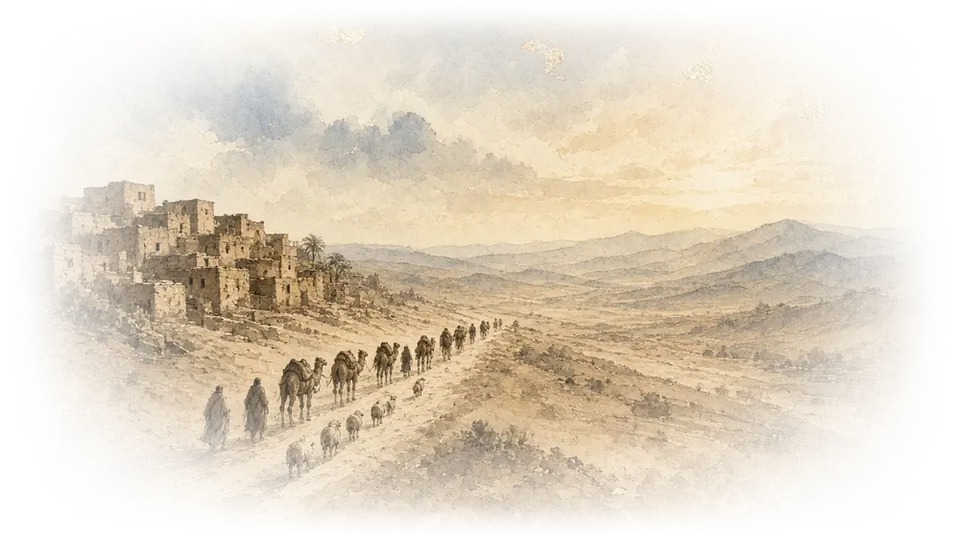
The descent to Mitzrayim was part of the ascent (LS 5, §2–5)
Lech lecha means “go to yourself,” a steady climb toward one’s purpose; Avraham kept “going and journeying to the South,” toward Yerushalayim. Then, suddenly, a famine sends him down to Mitzrayim, where Sarah is taken by Pharaoh. How can a parshah named for ascent contain such a descent? The Rebbe answers with “the works of the Fathers are a sign for the children”: Avraham’s descent foreshadowed, and made possible, the Egyptian exile and the Exodus “with great wealth.” He left “weighed down with cattle, silver and gold,” having turned even the most secular things to the service of G‑d. The end was implicit in the beginning. So it is with our exile: it is a preparation for the Geulah, which brings us higher than we could have reached without it. What looks like decline is, beneath the surface, the world becoming more refined.
“Abraham’s removal to Egypt was not an interruption but an integral part of the command of “Lech Lecha”—to journey towards that self-fulfillment which is the service of G‑d.”
“Our exile, like his, is a preparation for (and therefore part of) redemption.”
Making the “something” into “nothing”
In his ma’amar for Parshas Noach 5737, the Rebbe explains the Sages’ teaching, “The deeds of the righteous (Tzaddikim) are greater than the act of [creating] heaven and earth” (p. 167). Creation makes something from nothing. The tzaddik does the reverse: in the Rebbe’s words, the deeds of the righteous “are even greater, being that they make the something (Yesh) into nothing (Ayin).” That is the toil of every Jew, since “Your people are all righteous”: “to reveal and show the [G‑dly] “nothing” (Ayin) in the something (Yesh).”
How? Through the mitzvos. Adam was placed in Gan Eden (the Garden of Eden) “to work it and to guard it,” where ““to work it” refers to the 248 positive action mitzvot and “to guard it” refers to the 365 negative prohibitive mitzvot”, 613 in all. And the ma’amar opens with the Zohar on the bris: “whosoever guards the covenant upon which the world is sustained is called ‘righteous’ (Tzaddik).”
“Teach like Avraham”: only what you discovered yourself can you pass on
This week Chabad.org posted a short teaching (X, Oct 20, 2026), with a card that reads: “You can only teach that which you have discovered for yourself.”
In a sichah on these parshiyos the Rebbe draws a related contrast. Noach rebuked his generation for 120 years, but “he did so primarily because he was commanded to.” Avraham’s service, by contrast, began with his own search: “The inception and foundation of his Divine service were predicated on logic, on proofs of G‑d’s existence that he had derived by observing phenomena in this world.” The Rambam stresses that he found Hashem alone, v’lo hayah lo melamed v’lo modia davar, “He had no teacher, nor was there anyone to inform him,” and that in the end “thousands and tens of thousands” gathered to him.
Avraham could bring others to Hashem because he first made the truth his own. And the Rebbe adds the other half of the same journey: to change the world, a person must “go out” and “leave behind his own self-concern,” his own will, habits and way of thinking.
Two days later (X, Oct 22, 2026), Chabad.org posted a companion teaching under the card “Every journey in life leads inward”: “But you see your journey from within. From within, every journey leads in one direction: Towards within. Towards yourself. Closer and yet closer.” It ends: “To the land in which G‑d shows you yourself.”
“Nobody believed Noah. But Abraham, some say, convinced most of his generation. Noah talked as someone who followed a tradition of the past. Abraham described how he had discovered G‑d on his own. Teach like Abraham.”
Tzvi Freeman, “Make It Your Own,” Chabad.org · “From the wisdom of the Lubavitcher Rebbe, of righteous memory; words and condensation by Rabbi Tzvi Freeman.” The post reproduces this text word for word; no specific sichah is cited. · chabad.org/…/aid/8084
Chabad.org (@Chabad), post on X · Oct 22, 2026 (9:00 AM PDT), text and card image (“Every journey in life leads inward.”) · x.com/Chabad/status/2113299342157127870
Tzvi Freeman, “Traveling to Yourself,” Chabad.org · “From the wisdom of the Lubavitcher Rebbe, of righteous memory; words and condensation by Rabbi Tzvi Freeman.” The post reproduces this text word for word; no specific sichah is cited. · chabad.org/…/aid/97377
The Rebbe, “Lech Lecha: Avraham’s Achievement,” Likkutei Sichos vol. 15, p. 83ff. (sichos of Shabbos Parshas Noach 5724 [1963] and Shabbos Parshas Balak 5724 [1964]); trans. E. Touger & S. B. Wineberg, Chabad.org · §5 (Avraham’s service founded on proofs he derived himself), §7 (Noach rebuked “primarily because he was commanded to”), §8 (“go out,” leave behind self-concern) · chabad.org/…/aid/4736639
Rambam, Mishneh Torah, Hilchos Avodah Zarah 1:3 · Hebrew text; English “He had no teacher, nor was there anyone to inform him” from the trans. of E. Touger (Moznaim), via Sefaria · sefaria.org/…Foreign_Worship…1.3
Ayin, Efes, Tohu: 613 ways to set the self aside
Rav Yitzchak Ginsburgh describes three ways of setting the ego aside, each with a Hebrew name:
- Ayin (אין), “nothing”: becoming nothing before Hashem.
- Efes (אפס), “zero”: cooling the heat of self-centered emotion until it is down to zero.
- Tohu (תהו), primordial chaos (the tohu of Bereishis 1:2): returning the self to that primordial state.
Add up their numerical values: אין = 61, אפס = 141, תהו = 411, and 61 + 141 + 411 = 613, the number of the mitzvos. All 613 mitzvos, he concludes, serve one inner purpose. And the ego must be set aside because it is not the whole truth.
“All for the sake of neutralizing my ego.” (~2:23–2:31)
“The ego is actually imaginary state of being, which is not the ultimate truth, not the ultimate revelation that there is one and only one reality, which is the creator.” (~1:03–1:23)
Adam, Noach, Avraham: three models for all humanity (00:00–08:35)
The Torah is not a history book but the microcosm of all history, and three figures stand at the root of humanity as three basic models. Adam starts very high, in a world without sin, and falls. Noach is the witness of a world that has collapsed completely, the divine spark that never goes out. Then comes Avraham: « Abraham est appelé par nos maîtres le grand reconstructeur ». He knew neither Adam’s sinless world nor Noach’s destroyed one; his task is to rebuild, and to lead the world beyond Adam’s level, to the Geulah.Translation: “our Sages call Avraham the great rebuilder”
What comes free is fragile (08:35–11:13; 16:29–17:33)
Adam was created at his high level; he had not earned it, and so it could not be infinite, and he fell. « La seule chose qui est gratuite, c’est le chemin qui mène à la mort » is his French rendering of a line of the Zohar: what is gained without effort is easily taken away. The other side of the coin: if you started far away and crooked, « tu as toutes les chances de réussir ta vie ». That is why our Sages say the baal teshuvah stands higher than one who never fell.Translation: “The only thing that comes free is the road that leads to death.” · “you have every chance of making a success of your life”
Yishmael rode on his father’s success; Yitzchak started from nothing (11:13–16:29)
Why did Yishmael go wrong, after all Avraham’s love, education and prayer? Not, he insists, because he was only Hagar’s son: Hagar spoke with angels as naturally as with neighbors, and after Sarah’s passing Avraham took her back as Keturah. His answer, which he attributes to our Sages: Yishmael wanted to follow his father’s path of chessed by riding on his father’s spiritual wealth, like opening a business with all of one’s father’s money. « Une réussite facile est une réussite fragile, dangereuse. » Yitzchak chose the opposite pillar, gevurah, and began from zero, and he succeeded.Translation: “An easy success is a fragile, dangerous success.”
Noach’s model: rebuilding after catastrophe (18:34–20:40)
From Noach we learn that even when a person or a whole world has hit bottom, one must never believe there is no way back. Noach did not despair; he took everything in hand and refounded humanity. The closest example is our own generation after the Shoah, « un véritable déluge, pas d’eau mais de feu »: its survivors crossed the sea and rebuilt a people by rebuilding a land.Translation: “a true flood, not of water but of fire”
Walking with Hashem, or walking before Him (22:48–31:24)
Why does the whole Torah follow Avraham, and not Noach, the tzaddik tamim who was even one of Avraham’s first teachers? Rashi points to two verses: Noach “walked with G‑d” (6:9), while Avraham, at 99, is told “walk before Me and be perfect” (17:1). Only then come the milah, the new name and the promise of Yitzchak: the birth of the Jewish people. « Le service divin d’Israël, c’est aller devant D.ieu. » Even Avraham needed 99 years, 24 of them in Eretz Yisroel, to reach it.Translation: “Israel’s service of G‑d is to go before G‑d.”
Noach waited; Avraham would not let go (32:26–42:26)
Told the world would be destroyed, Noach built for a hundred years and waited for people to ask him what he was doing. He should have gone out with a trumpet: « Va réveiller le monde. » Avraham, facing only Sedom, bargains and even says, “Will the Judge of all the earth not do justice?” « Il lâche pas prise. C’est ça la différence. » Noach was no egoist, Heaven forbid: he trusted that if the Master of the world, the Healer, decided to destroy, it was the only cure, and who was he to object? That is walking with G‑d, total submission. Avraham, and Moshe after him, learned to speak to Hashem.Translation: “Go wake up the world.” · “He doesn’t let go. That’s the difference.”
Words and thoughts: a marriage parable (43:28–48:17)
In a loving couple, in a quarrel, one says Go to your mother’s! while meaning Stay and make up. A husband who walks out for good because she told me to has understood nothing: « apprends à vivre au niveau de mes pensées, pas au niveau de ma parole ». In the parable Hashem is the husband. Noach heard only Hashem’s word; Avraham reached His thought: when He says I will destroy, what He wants most deeply is that everything be repaired without violence.Translation: “learn to live on the level of my thoughts, not on the level of my words”
Nothing is ever completely lost (48:49–53:40)
The Talmud tells of Nevuzaradan, who conquered Yerushalayim and spilled blood without limit. When he heard whose blood was seething in the Beis HaMikdash, the prophet Zechariah’s, he was struck by teshuvah and converted (Gittin 57b). The world was created on the principle « que rien n’est absolument perdu ». And Avraham’s kindness is not the cliché of an open tent with food: « Abraham, son récède [sic], c’est qu’il est capable dans le pire des hommes de retrouver l’étincelle divine et de la rallumer ».Translation: “that nothing is ever completely lost” · “Avraham’s secret is that he can find the divine spark even in the worst of men and rekindle it”
Love strong enough to argue (57:52–1:00:00)
Avraham’s path is dangerous: only one who is completely sure of his love can say to the Master of the world, You are not doing justice. People who never dare to argue are often those who feel the relationship is too fragile. A silent home can be a cold one: « La différence entre la paix dans le couple et fiche-moi la paix. »Translation: “The difference between peace in the marriage and ’leave me in peace.’”
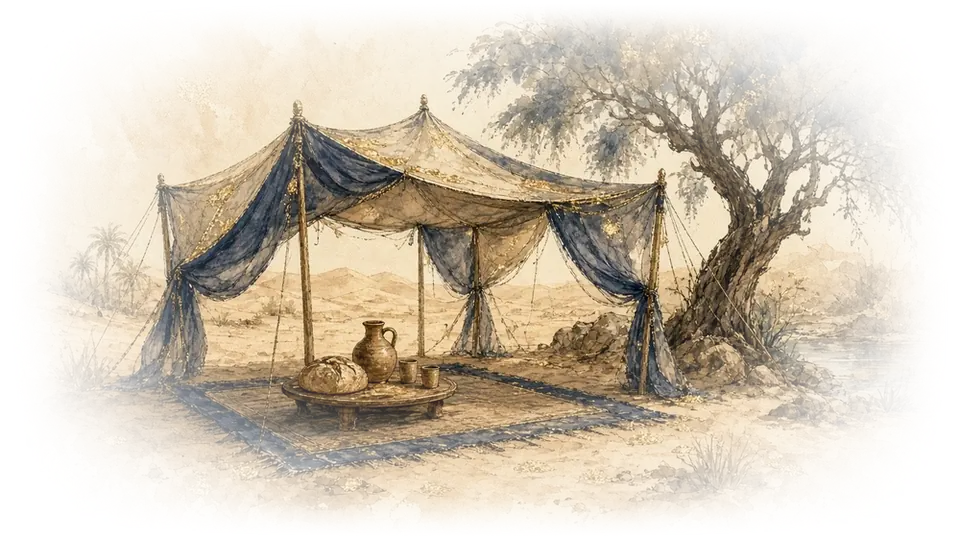
Four blessings, and why the Amidah ends with Avraham alone (02:52–09:41)
Hashem promises Avraham: “I will make you a great nation, I will bless you, I will make your name great, and you will be a blessing” (12:2). The Gemara reads each phrase as a line of the Amidah: “G‑d of Avraham,” “G‑d of Yitzchak,” “G‑d of Yaakov,” and “you will be a blessing”: the blessing closes with Avraham alone, Magen Avraham. “these are not just redundancies”. But why should the end of the blessing belong only to Avraham?
Pesachim 117b · Reish Lakish on Bereishis 12:2 · sefaria.org/Pesachim.117b
First answer: the giving that survives assimilation (10:11–27:36)
Following the Bnei Yissaschar: the Amidah is the history of the Jewish people, and its “end” is the last generations before Mashiach. Avraham is chessed, giving. In the final exile much will be eroded, but “one thing assimilation that not destroyed and that’s the characteristic of Abraham”. The Yerushalmi notes that our people gave generously even for the wrong cause, the Golden Calf, as well as for the Mishkan. “many of us don’t appear like Jews anymore but we still give”: the closing blessing, Magen Avraham, shields us at the end.
Second answer: at the end of exile, love leads (27:36–32:34)
The three Avos are three paths: chessed (Avraham), gevurah (Yitzchak) and emes (Yaakov). In the end of exile, sternness no longer works; love is the main path. He tells of a teacher who was warned about a troubled boy and was told by a wise principal: “you must love him the double portion of love because last year’s teacher hated him”.
Third answer: like Avraham, find Hashem yourself (32:34–40:46)
Avraham had no teacher; he found Hashem on his own. The end of exile resembles the beginning: many Jews today grow up without a chain of tradition and must discover it themselves, and the Zohar speaks of Mashiach bringing even tzaddikim to teshuvah. “if you search you will be able to discover your own G‑d just like Abraham discovered his”. So when a child or student finds his own way in, “respect that in your child respect that in your student”.
The Rebbe’s call on Shabbos Lech Lecha, 13 Cheshvan (41:54–45:42)
On Shabbos Parshas Lech Lecha, 13 Cheshvan 5750 (1989), the Rebbe asked employers to give their workers a little extra money with the words “in addition to your wage here is an extra amount of money for you to distribute to charity”, and teachers to give children coins for tzedakah: training a generation to be givers, Avraham’s mark that no exile can erase.
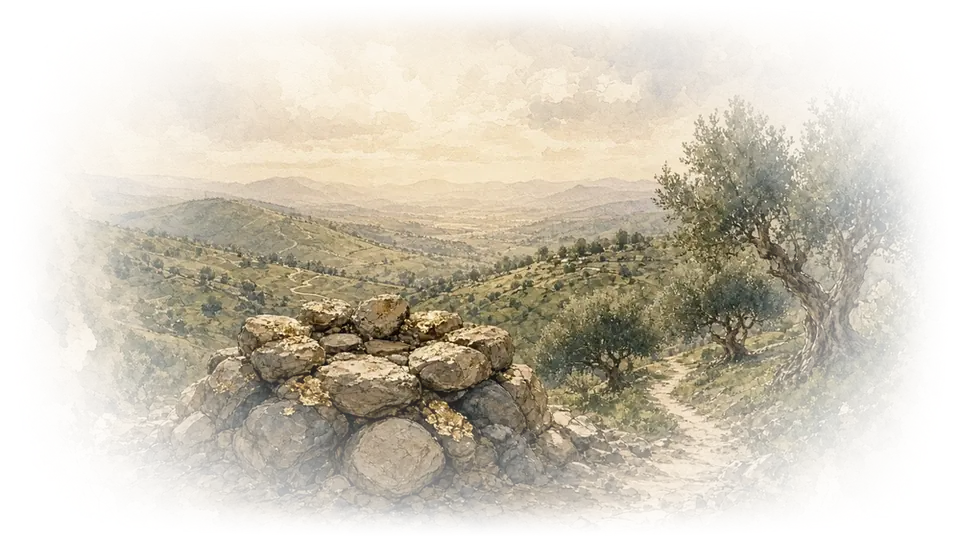
Why was leaving home a test? (02:43–07:11)
Leaving home is not hard for everyone; Hagar left a palace to be a maid in Avraham’s house. The test was that at 75 Avraham had already become great where he was, teaching and bringing people to Hashem. “so when G‑d says to him leave all of that and come to the land that I will show you”: “that was an irrational thing to do”. The first Jew’s first step was beyond reason.
Yishmael and Yitzchak: natural and supernatural (07:11–14:17)
Yishmael was born naturally; Yitzchak was born to a 90-year-old Sarah, against nature. Yishmael’s milah was at 13, when he could understand and agree; Yitzchak’s at eight days: “being circumcised at eight days nobody is asking your opinion”. Two kinds of bond with Hashem: one that makes sense to me, and one that is above my understanding.
A commitment beyond reason cannot be argued away (13:13–16:27)
What reason builds, a better reason can knock down. “if your commitment is Beyond Reason what’s going to happen to change your mind”: nothing. That is the Jewish people’s survival across history.
“It works for me” is not enough (16:27–23:25)
The most rational reason to keep the mitzvos is that they make life better: “the ultimate rational argument is it works for me”. It is good, but it is fragile; the day it seems not to “work”, it falls apart. Our generation needs Yitzchak’s bond, not only Yishmael’s.
Life itself is sacred beyond reason (23:25–30:21)
Yitzchak’s whole life was a gift above nature. So too every life: “being alive is not a reasonable thing it’s a Divine thing that’s the sanctity of life”. We do not value life because it is useful: “life is sacred irrationally beyond the laws of nature”.
The tzaddik sweetens judgments (00:03–06:22)
A new series on two Chassidic classics, the Ropshitzer’s Zera Kodesh and the Bnei Yissaschar’s Igra d’Kallah. Their common thread is “the concept that sadik [sic: tzaddik] is the one that sweetens the judgments”: the tzaddik inspires each of us to turn severity into kindness through our own work.
The inverted nun: from wrath to nachas (06:55–10:34)
Rashi on 11:32: the inverted nun says that until Avram there was Divine wrath in the world. With Avraham the twenty generations of anger end and Hashem’s nachas begins. Hashem, like a groom, wants a happy marriage with the Jewish people; Matan Torah is the betrothal, and “the ultimate zivak [sic: zivug] is going to happen with the coming of meshiach [sic]”.
“He pitched his tent” (12:8), letter by letter (12:04–27:37)
Reading the verse through the Zera Kodesh: “you see what you want to see”. הָהָרָה = 215, plus one for the word itself = 216 = גבורה: “he uprooted the gevura” from its place. מִקֶּדֶם, “from the east”, is kedem, before creation; קדם = 144 = 2 × 72, chessed doubled: “you have a double dosage of kindness”. So too with people: remind someone of the excitement he had at the start, his kedem, and the severity melts. אָהֳלֹה is written “her tent” (Rashi: he pitched Sarah’s tent first); העי = 85 + 1 = 86 = אלהים, and the sea, ים = 50, is binah.
Paying his debts, and seeing the good (27:37–37:11)
“Journeying to the Negev” (12:9): the dry land is malchus, and הנגבה = 65 = Ad-noy. On the way back Avraham paid his debts (Rashi on 13:3): spelled out, the letters of Kel, אלף + למד = 111 + 74 = 185 = הקף, circling; “everywhere he went he was manifesting” the Name Kel unobscured. The practical lesson: “we should always see the good in people and around us and by doing that we’re literally extinguishing fires”.
1,420 years of prophecy (37:11–50:46)
The Bnei Yissaschar counts the era of prophecy, “a golden era of prophecy primarily starting with the time of avraham [sic]”. From Yitzchak’s birth to the passing of Malachi, the last prophet, are 1,405 years, hinted in the word אַתָּה when its alef is read as elef, 1,000. But the count can begin earlier: Avraham was 85 when Yishmael was conceived, and 85 is פֶּה, “mouth”: from then on Avraham had a mouth to speak with Hashem directly. Adding those 15 years gives 1,420 years of the first era of prophecy, which will return in full with Mashiach.
Always walking: “Lech Lecha” leads to “Vayeira”
The two parshiyos of Avraham are named for two verbs: Lech Lecha, walking, and Vayeira, seeing. Rav Ginsburgh: because Avraham walked, Hashem showed Himself to him. Even after reaching Eretz Yisroel, Avraham “went forth steadily towards the south” (Bereishis 12:9), because “Abraham understands that G‑d’s command is for him to always be walking, always be in motion.” The south stands for chessed and for emunah. Each day Avraham reached a new, deeper understanding of Hashem, and each day he had to go beyond it: “Thus, every day he had to travel further south, further on the path of faith.”
“Every day of his life, Abraham discovered a new and deeper understanding of G‑d—faith based on reason and knowledge. But at the same time, he had to let transcend this new understanding to reach a higher level of faith.” (sic, “let transcend”, as printed)
The Torah reading · Bereishis 12:9
The missing yud: faith beyond reason is tzedakah
“He had faith in Hashem, and He considered it tzedakah” (Bereishis 15:6). The word וְהֶאֱמִן is written without a yud. Following the disciples of the Baal Shem Tov (he cites the Bnei Yissaschar), the yud is faith based on reason and wisdom: “Abraham was a great thinker. He initially arrived at his faith in G‑d through rational logic.” But “he transcended faith that is based on wisdom—he essentially pushed the letter yud out of “he had faith.”” Why is that called charity? Faith from reason only gives back to Hashem the mind He gave us.
“if I push my reasoning mind away and achieve faith that is beyond reason, then I am giving G‑d, as it were, something new, something that He did not give me. Therefore, faith that is beyond reason is considered charity.”
The Torah reading · Bereishis 15:6
Avraham and Lot: don’t give up on the body
Why did Avraham fight so hard to rescue Lot? Rav Ginsburgh reads אַבְרָהָם as ever mah, and Lot (לוֹט = 45 = mah) as the body: the soul comes down to refine the body. Every Jew has a “Lot” in him that can look far from holiness.
“we should not give up on the body, we should never give up on our physical state. Instead, we are obligated to commit our entire soul to saving our body and bringing it back to holiness.”

“Anarchy must ultimately destroy the anarchist”
In 1968, after years of riots in American cities, the Rebbe used his 19 Kislev farbrengen to speak about the pursuit of tzedakah umishpat, “righteousness and justice”, building on Padah veshalom nafshi, “He redeemed my soul with peace” (Tehillim 55:19), the verse the Alter Rebbe was saying when he was freed. The duty to bring righteousness and justice into the world goes back to Avraham, and it rests on each person. But it can only be reached through shalom: violence and destruction abandon that path and end by destroying the one who uses them. Restraining people from destruction, “without cruelty” as the Rebbe stressed, is for their own good. (Said in 1968 about the unrest of that time.)
“[F]rom the time of Abraham, the first Jew, we were taught to practice righteousness and justice. […] It is, furthermore, incumbent upon each individual to bring these values of righteousness and justice into the world around him.”
“Anarchy must ultimately destroy the anarchist. […] It is for the good of those who would be destructive to be restrained.”
“This […] will be a prelude to the fulfillment of the calling ’to perfect the world under the sovereignty of the Almighty.’”
“By your continued building you will be comforted”
In the spring of 1956 terrorists attacked the synagogue of the Kfar Chabad agricultural school during Maariv, killing five students and a teacher. The village was close to breaking up. After days of silence the Rebbe answered in three Hebrew words: Behemshech habinyan tinacheimu, “By your continued building will you be comforted.” The villagers built a new vocational school on the very spot. The Rebbe’s answer to an attack on a place of Torah is not retreat but more building: more Torah, more mitzvos, a fuller shul.
Rabbi Yehuda Krinsky, “Remembering Summer 1956,” Lubavitch.com · Aug 10, 2017 (gives the words as “B’zos tenuchomu”) · lubavitch.com/remembering-summer-1956
“Speak to him in a diplomatic way”
The Rebbe held that antisemitism should not be given centre stage. Speaking about protests against a French head of state, he said: “the only way to deal with an antisemite is not by coming to him every day and shouting: Listen here, you are an antisemite! … Rather, speak to him in a diplomatic way.” In the mid-1970s he advised the rabbi of Lyon and Nice to build ties with the leaders of hostile groups rather than chase the foot soldiers. Alongside this, the Rebbe insisted on practical security and on Jewish pride: G‑d protects us, and we take the natural means of protection.
Shliach + 10 = Mashiach, and a cheshbon hanefesh (~0:04–1:13; 11:19–11:51)
At the farbrengen of Leil Simchas Torah 5746, the Rebbe said it is stated in “sifrei cheshbon” that Shliach with the number 10 adds up to Mashiach (שליח = 348, plus 10 = 358 = משיח). It is the shliach who serves with all ten powers of his soul. When the Rebbe edited the sicha for the Kinus HaShluchim, he added a footnote: “sifrei cheshbon” has a double meaning, plain arithmetic and cheshbon hanefesh. Rabbi Jacobson: “in order essentially to appreciate Moshiach and Shliach you need to have a Kheshbon Hanefesh. It doesn’t come automatically. A Kheshbon Hanefesh in simple English means a little soul searching. Introspection.” Lech Lecha begins with a journey inward; Geulah, too, starts with an honest look at oneself.
As cited by Rabbi Jacobson · the Rebbe, sicha of Leil Simchas Torah 5746, edited for the Kinus HaShluchim with the “cheshbon hanefesh” footnote (cited in the shiur; not opened)
Not “why?” but “what are we going to do about it?” (~16:40–17:13)
He does not claim to explain why the Geulah has not yet come. He cites the Rebbe’s letter to a doctor who asked about the Holocaust: “If Hashem wanted to let us know why, he would tell us. Since Hashem didn’t tell us, it means we don’t need to know why. However, we don’t ask why, we have to ’What are we going to do about it?’ It’s a very different question.”
“He also now became a spectator” (~21:52–22:55)
Rabbi Jacobson tells a story from Simchas Torah 5730. At his bar mitzvah age he left his childhood place by the Rebbe’s hakafos and watched from the bleachers. The Rebbe asked his father where he was, then smiled: “He also now became a spectator.” “And the Rebbe did not like spectators. He wanted us to be players in the game … To make a difference, to be proactive.”
As if the Rebbe called you into yechidus (~24:35–27:09)
The Rebbe said that a sicha at a farbrengen was like yechidus, spoken to each person. “So, the first thing we have to do is envision if the Rebbe called you in personally into yechidus. There’s no one else there.” If the Rebbe promised success in a business, no one would leave a stone unturned. “So, why don’t we apply the same idea to bring Moshiach? Very simple. Because money is something we relate to. And Moshiach, we don’t.”
Can you explain Mashiach to someone who never heard the word? (~29:14–1:04:43)
His test of understanding: “can you honestly and sincerely explain what Mashiach is to a person that never heard that word before?” He builds his answer on the Rambam (Hilchos Melachim) and the Alter Rebbe (Tanya, chs. 36–37): Geulah is the revelation of G‑dliness in this physical world, the product of our mitzvos. Put simply, it means discovering who we truly are: “Who you are should define what you do.” Moshiach is “a world where you discover who you are, you discover what makes everything tick.”
As cited by Rabbi Jacobson · Rambam, Hilchos Melachim chs. 11–12; Tanya, chs. 36–37
The Rebbe’s letter to a dry-cleaner (~48:48–54:05)
In a letter in Igros Kodesh, the Rebbe finds avodas Hashem even in dry cleaning. The neshamah is given pure, and life stains and wrinkles it. It is washed in warm water (passion), cleansed with “chemicals” and pressed (kabbalas ol): “Every mitzvah is another chemical that cleanses the different stains.” Rabbi Jacobson took from this how Geulah will look: the same world, seen for its purpose. “So, there’ll be dry cleaners, and there’ll be pizza shops, and there’ll be bakeries. At least in the first Kufah [sic: tekufah]. But we’ll see the purpose of it all.”
Two practical steps (~1:02:37)
“First thing is you have to take it seriously that it means you.” “Secondly, you have to start understanding and learning what Messiah and Gullah [sic: Geulah] is.” Learn the Rebbe’s sichos on Geulah and Chassidus, and picture what a Moshiach’dik day in your own life would look like.
COLlive, “Rabbi Simon Jacobson Gives Moshiach Shiur” · Oct 19, 2026 · collive.com